
Design of a Travel App for Booking Trips and Hotels
Travel is a long journey from dreaming of your destination to returning home, and the app is your only companion, there for you every step of the way—it books your trip, sends remi...
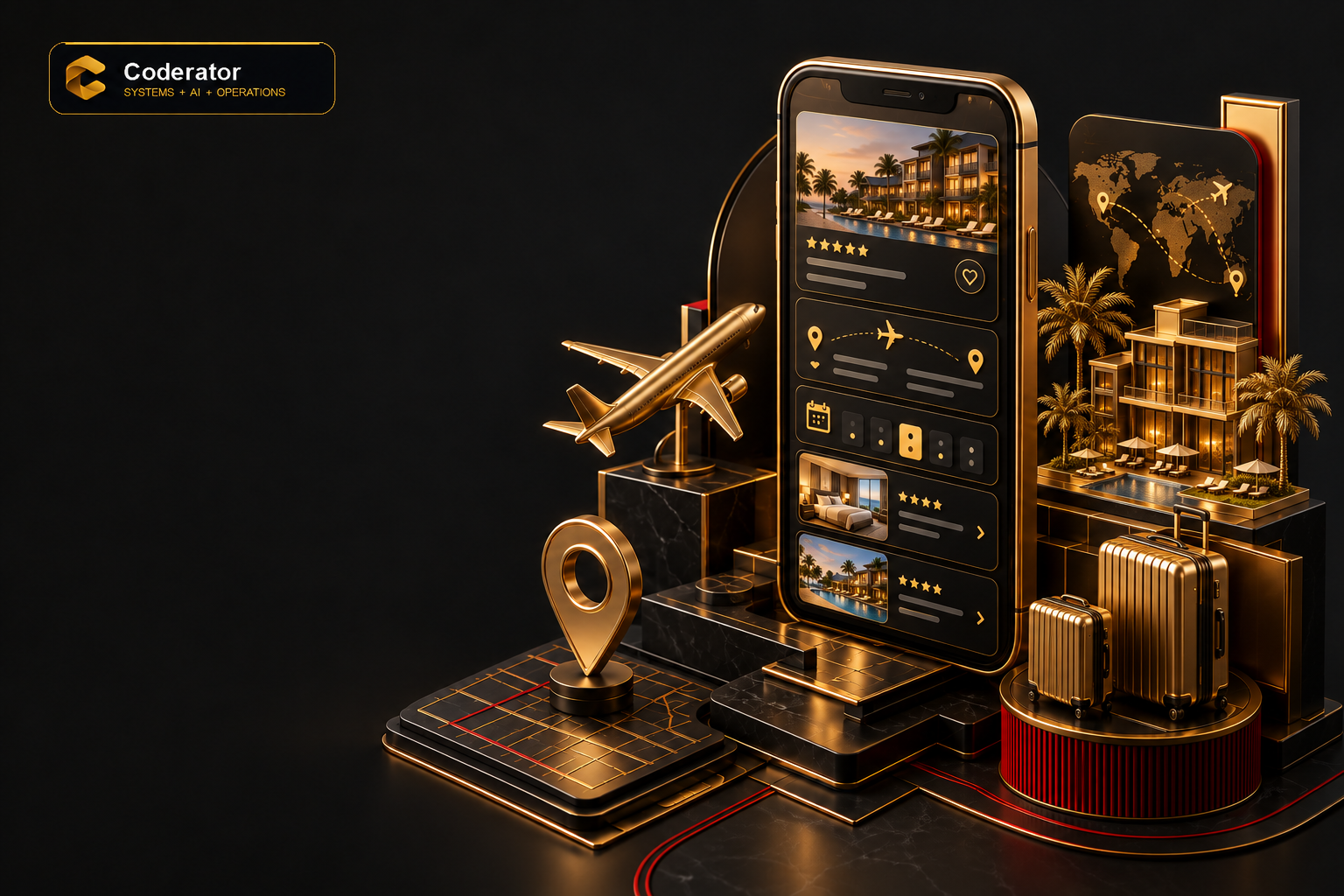
Travel isn’t just a single booking—it’s a long journey that begins with dreaming of a destination, continues through research, comparison, and booking, then moves on to the trip itself, including travel, accommodation, and exploration, and ends with the return home. At every stage of this journey, the app is the traveler’s only constant companion, always in their pocket — It helps them search for a destination, makes reservations, reminds them of their flight time and gate, displays their ticket and booking details even when they’re in a foreign country without internet access, and guides them to their destination’s landmarks. Herein lies the difference that most sellers of “travel apps” overlook: They build a scaled-down version of a booking website, ignoring the fact that travel is, by its very nature, a mobile experience, and that the app has the capabilities of a smartphone—offline functionality, notifications, and location services—that make it a travel companion, not just a booking screen. A successful travel app accompanies the traveler throughout their entire journey—it doesn’t just say goodbye after the booking is complete.
In this guide, we provide you with what your project truly needs: Why apps are more powerful than websites for travel, how to leverage smartphone capabilities during a trip, how the booking engine and integrations work, how to sell travel packages, what the app and dashboard specifications are, and how artificial intelligence can help you — and how we build all of this in Coderator.
1. Who is Coderator? And why do we build tourism apps differently?
Coderator is a software company specializing in building advanced business systems and integrating artificial intelligence into real-world operating environments. We operate from our offices in Giza and Riyadh to serve companies in the Middle East and North Africa. We treat a travel app as a travel companion in the traveler’s pocket that harnesses the power of their phone—not just a scaled-down version of a booking website. That’s why we don’t start with the booking screen—we start with the traveler’s entire journey: How do we guide them from dreaming about a trip to booking it, traveling, and returning home? How do we serve them while they’re abroad without an internet connection? And how do we build a reliable booking engine that integrates with tourism systems? Then we’ll build an app that accompanies the traveler and supports your business. Most importantly: the code and your customers’ data are entirely yours—so you won’t be held hostage by a ready-made script or a rented platform that locks up your business and your travelers’ data.
2. The Travel Companion app—more than just a booking screen
The travel website is excellent for searching and booking from a browser, but the app has features that make it the traveler’s companion throughout the entire trip—which is exactly what travel requires. Travel is, by its very nature, a mobile experience: travelers carry their phones with them at the airport, on the plane, at the hotel, and on the streets of a foreign destination, and they need their bookings, tickets, and information at their fingertips at all times. The website serves them while they’re sitting at their computer before the trip; the app serves them at every moment of the journey.
This understanding changes everything. The app accompanies the traveler through every stage of their journey: It inspires them with destinations and helps them search, compare, and book before traveling; it stores their tickets and reservations and reminds them of their schedules while traveling; it guides them at their destination and serves them during their stay; and it stays with them for their next trip. Anyone who builds an app for you as a mini version of a website wastes this potential, resulting in an app that’s used once for booking and then forgotten. We build the app to be a companion present at every stage, because a traveler who finds a companion in your app—one that serves them throughout their journey—will return to it on every trip—and that’s what builds loyalty and repeat usage, which is the foundation of any travel app’s success.
3. The Power of the Smartphone on a Trip
This is the essence of the app’s uniqueness—and what those who build a website clone overlook. The power of the phone during travel specifically solves real problems for travelers:
- Offline Functionality: Saving tickets, reservations, vouchers, and addresses so they can be accessed without an internet connection—crucial for travelers abroad without a local SIM card or facing expensive roaming data charges.
- Instant Notifications (Push): Reminders for flight times and check-in, alerts for gate changes or flight delays, and destination recommendations—critical information delivered in real time.
- GPS: Explore landmarks and services near the traveler at their destination, find their hotel, and suggest nearby activities—the app becomes a travel guide at the destination.
Note that each feature solves a real travel problem: Offline mode saves a traveler stranded at a foreign airport without internet who’s looking for their ticket; a gate change notification might prevent them from missing their flight; and location services turn your app into a guide in a city they don’t know. These features transform the app from a one-time booking tool into an indispensable travel companion. We build them into the core of the app because they’re what set it apart from a website crammed onto a screen, and what makes travelers keep it on their phones and come back to it.
4. What kind of travel app do you need?
“Travel app” is an umbrella term that encompasses different models, each with its own specifications and priorities. Anyone who offers the same template to everyone ignores the nature of your business:
We’ll start with a session to define your model (or combination of models), then build the right specifications — A travel agency’s core is showcasing its packages, a booking platform’s core is integration and a vast inventory, and flight booking requires GDS integration. They cannot be built the same way.
5. Booking Engine, Availability, and Pricing
This is the heart of the technical application—and what distinguishes a true travel app from a simple interface. The booking engine manages a complex process behind a simple interface: searching by destination, dates, and number of travelers, displaying what’s actually available during that period along with prices—pricing that may vary based on season, demand, and availability—and precise availability management that prevents overbooking by locking in the seat or room as soon as payment begins. Then comes a straightforward booking process: selecting the option and add-ons, entering the required traveler information (passport, ages), making a secure payment, and receiving immediate confirmation with the issuance of the ticket or voucher.
A key feature of the app is that the confirmation and ticket are saved on the phone for offline access, and notifications remind users of their schedules. We build the engine to operate accurately and quickly under pressure (peak seasons and promotions bring enormous traffic), because any glitch or delay in the booking process will cause you to lose a traveler to a faster competitor. A reliable booking engine is the foundation of travelers’ trust in your app, and we build it with care because it is the core of the service, not just its interface.
6. Integration with Travel Systems
This is where the difference between a serious travel app and a simple interface becomes apparent. Travelers want a wide range of options and real-time prices, which requires integration with inventory sources. We build integrations tailored to your business model: connecting to global distribution systems (GDSs such as Amadeus and Travelport) to display flights, hotels, and real-time prices worldwide, integration with channel managers and booking platforms to synchronize hotel availability and rates and prevent booking conflicts, and connections to payment gateways (both local and international for inbound tourism).
For those who don’t need complex integration (such as an agency selling its own packages), we’ll start with your own inventory and leave the door open for expansion. Integration is what transforms your app from a display of a limited number of options into a gateway to a vast inventory of travel options with competitive, real-time prices—which is especially essential for online travel agencies (OTAs) that compete on price and selection. We design integrations to work seamlessly behind the scenes, so travelers see a simple experience while you operate from a unified system.
7. Packages: Flights, Hotels, and Activities Combined
This is a strength that competitors overlook, and it’s one of the most powerful ways to differentiate your travel app and increase the value of the booking. Travelers don’t want to book their trip piece by piece through different apps; they want to plan their entire trip in one place. A smart app enables bundling: booking flights and hotels together at a discounted package price, and adding car rentals, tours, travel insurance, or airport transfers to the same booking. This benefits the traveler (a complete trip planned with just a few taps) and benefits you (a higher revenue and cross-selling of additional services).
We’re building tools to support this: suggesting ready-made bundles (flight + hotel for popular destinations), a “Complete Your Trip” feature that suggests complementary services during booking, and comprehensive travel packages. Packages increase the average order value, set you apart from apps that sell a single service, and make your app the one-stop destination for travel planning—not just a ticket booking platform. We’re building these features because they meet travelers’ desire for simplicity while boosting your profits—which transforms your app from a booking tool into a full-fledged trip planner.
8. Traveler Experience and Account
The traveler’s experience in the app must be seamless, inspiring, and reassuring throughout their entire journey. We build it with mobile in mind: an attractive interface that inspires with destinations (pictures sell travel), easy search and filtering (destination, dates, price, rating, stars), and rich pages for hotels and trips (photos, amenities, location on the map, reviews, what’s included in the price), and booking with minimal steps and friction. After booking, the app’s true power kicks in: an account that consolidates all the traveler’s bookings and tickets in one place—accessible even offline—along with reminders for appointments and check-ins, booking management (modify, cancel), and a loyalty program with rewards.
We also include features to enhance their trip: a destination guide and local highlights, useful alerts (weather, visa requirements), the ability to share their itinerary with travel companions, and access to customer support. A seamless and inspiring traveler experience—from destination inspiration to the return trip—is what transforms a one-time user into a loyal traveler who plans all their trips through your app and recommends it to others. We build the experience to accompany and serve them at every stage, because a traveler who is satisfied with their first trip through your app is a customer for life.
9. Dashboard and Revenue Model
Behind the app is a dashboard that manages your operations and generates revenue. We build it as a comprehensive control center:
- Management of trips, packages, hotels, and tours (photos, prices, availability)
- Manage bookings by status, payments, and the issuance of tickets and vouchers.
- Management of offers, seasonal discounts, and bundled packages.
- Manage integrations (GDS, channels, payments) and traveler notifications.
- A customer database with travel history, preferences, and a loyalty program for remarketing.
- Revenue Model: Margin on packages, commission on bookings (for OTAs), or additional services.
- Reports: Most popular destinations, peak times, revenue, and booking sources.
- Team permissions (bookings, sales, accounting), and payment integration.
We tailor the dashboard and revenue model to your business, so you can efficiently manage your offers, bookings, and customers while controlling your revenue. And the data (which destinations are successful? When are peak times?) helps you make smart marketing and pricing decisions.
10. Artificial Intelligence in Travel Apps
This is where we truly excel—artificial intelligence in travel boosts bookings and enhances the user experience:
We add value by actually increasing your bookings and enhancing your travelers’ experience, while ensuring that your customers’ and travelers’ data isn’t leaked to public training models. Note that the trip planning assistant and the destination guide leverage the app’s nature as a travel companion—integrating artificial intelligence with the phone’s capabilities for a smarter travel experience.
11. Off-the-Shelf Solution or Custom Development? (When You Don’t Need a Custom App)
Here, we’ll take your word for it when those selling you off-the-shelf scripts say otherwise. The decision depends on your stage and your ambitions:
- An off-the-shelf solution may be enough if you’re a small agency testing an idea, with a limited number of offers, and want a quick launch at a low cost without complex integration or a large volume of bookings.
- Custom development becomes more cost-effective and powerful when you’re building a serious, competitive booking platform, need deep integration (GDS, channels), or advanced mobile capabilities (offline, notifications) that differentiate your experience, or if you have unique packages and a specific revenue model, or if you want full ownership of your data and experience without being tied to a script or a rented platform.
We won’t push you toward a custom app if you’re testing an idea on a small budget—a simpler solution might be enough to gauge the market. But when you’re building a serious tourism business where the traveler experience, integration, and packages are the core of your success, custom development is an investment you own—and one that grows with you. We’ll help you make the right decision for your stage of growth, with complete transparency.
12. Cost and Methodology
The cost of a travel app varies depending on its model, operating systems (Android, iOS), the complexity of the booking engine and integrations (GDS, channels), mobile capabilities (offline, notifications, location), packages, and AI components. Therefore, it’s not accurate to give a definitive figure before understanding your business—and anyone who gives you an instant price without asking questions is selling you a script, not a solution. We start by understanding your business model and scope, then we outline the costs and phases—and we often recommend starting with a minimum viable product (MVP) to validate the idea before scaling up.
Our methodology results in an app that accompanies the traveler and handles bookings: a discovery session where we define your business model, audience, and revenue model, followed by designing an experience that accompanies the traveler throughout their journey and leverages the capabilities of their phone; then building the booking engine, integrations, offline functionality, and notifications; followed by rigorous testing (especially during peak seasons) before launch; and finally, support and data-driven development. We build a travel companion that guides your travelers from the moment they dream of their trip until their return, and we evolve it as your business grows.