
Design of a Slaughtered Meat and Meat Delivery App
Selling meat online isn’t like selling any other product: the weight of the carcass varies, the price is determined after slaughter, the meat is cut to each customer’s specificatio...
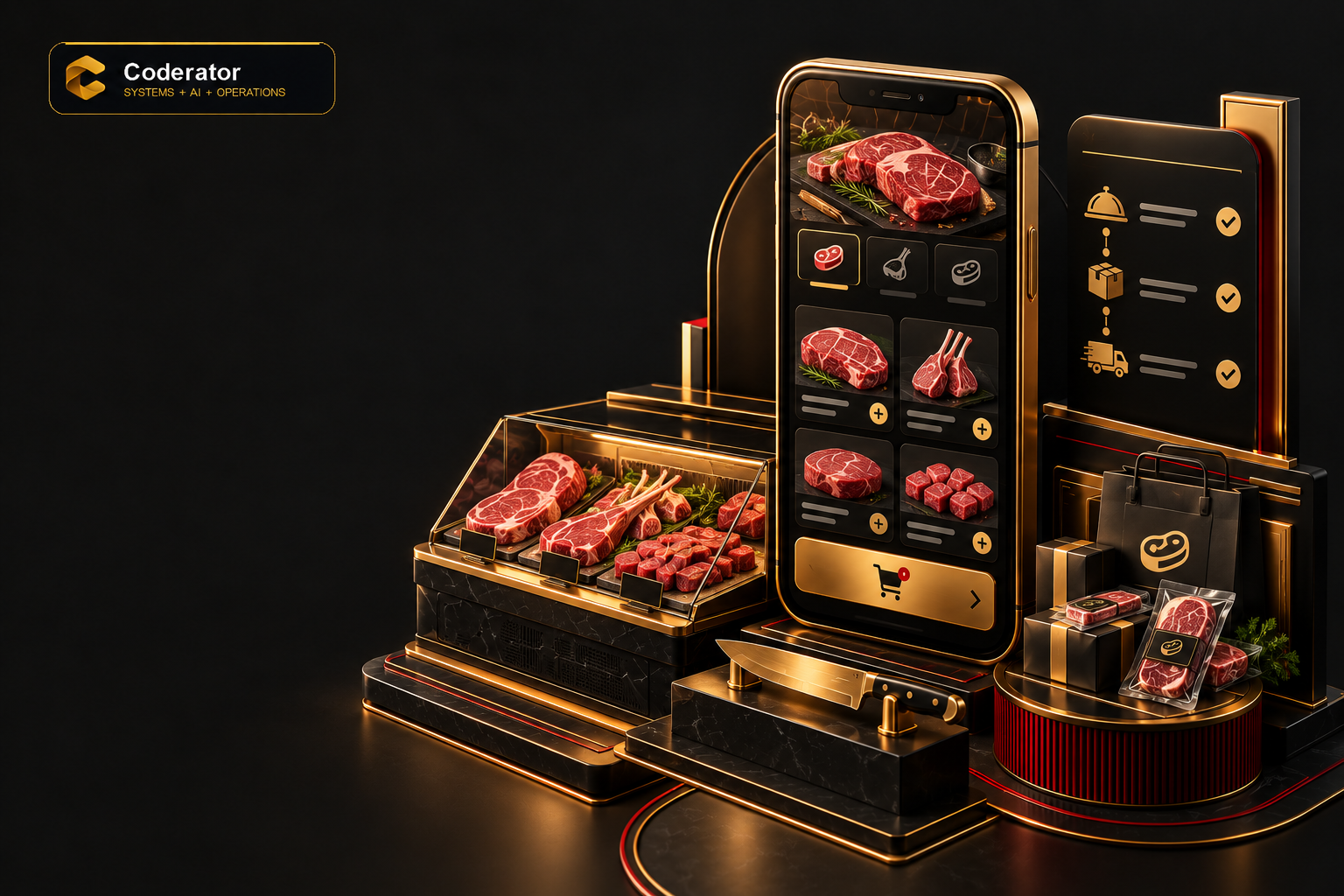
Selling meat and meat products online is a promising business with a rapidly growing market, but it presents a unique technical challenge not found in any other delivery app: the product is non-standard. When you sell a phone or a piece of clothing, the product is standardized, and its weight and price are known in advance. But with a carcass or cut of meat, the weight varies from one to another, and the final price isn’t known until after the animal has been slaughtered, cut, and the portion the customer will receive has been weighed. In addition, every customer wants a different preparation (type of cut, portioning, ground meat, head and offal, packaging type), and that freshness and the cold chain leave no room for error, and that the Eid al-Adha season brings an explosive peak in demand that is completely different from daily sales. Anyone who sells you a “meat delivery app” as if it were just any ordinary store ignores this unique nature of the business, resulting in an app that fails at the first order with a variable weight or the first Eid al-Adha season. A successful meat delivery app is built for the nature of this non-standard product—not like any ordinary delivery store.
In this guide, we’ll provide you with what your project truly needs: why meat is a non-standard product and how to handle it, how to manage on-demand processing, how to build trust in freshness and quality, how to manage the Eid al-Adha season, what the app and dashboard look like, how artificial intelligence can help you—and how we build all of this in Coderator.
1. Who is Coderator? And why do we build meat apps differently?
Coderator is a software company specializing in building advanced business systems and integrating artificial intelligence into real-world operating environments. We operate from our offices in Giza and Riyadh to serve companies in the Middle East, North Africa, and beyond. We treat the meat delivery app as a system for a non-standard product that is sold by variable weight, prepared to order, and requires freshness and trust—not just a typical delivery service. That’s why we don’t start with the product list but with the nature of the product itself: How do we price based on actual weight? How do we manage preparation according to each customer’s order? How do we build trust in freshness and slaughter practices? How do we handle the peak of the Eid al-Adha season? Then we build an app that serves this nature. Most importantly: the code and your customer base are entirely yours—so you won’t be held hostage by a platform that takes a commission and locks in your brand and customers.
2. Meat Is a Non-Standard Product (The Fundamental Difference)
This is what must be understood above all else, and what distinguishes a meat delivery service from any other delivery service. In regular stores, the product is standardized: its weight is fixed, its price is known in advance, and what the customer sees is exactly what they receive. Meat is radically different: each carcass varies in weight, and the final price of the cut the customer orders (a kilo of meat, for example) depends on the actual weight after cutting and trimming, and even the weight of the same “small carcass” may vary from one to another. This means that the app cannot operate on the “fixed price for a fixed product” model like a regular store.
This nature requires a specific technical approach at every stage: price display (estimated per kilo, final after weighing), payment (initial payment followed by adjustment based on actual weight), inventory (managed by weight, not by count), and preparation (each order is cut and prepared according to the customer’s preference). Anyone building an app based on the logic of a regular store immediately runs into this challenge: How can a customer pay a fixed price for a product whose weight is not fixed? We’re building the app around the non-standard nature of the product from the ground up, because this is the fundamental challenge that trips up those who treat meat like any other commodity—and the app’s success begins with solving it intelligently.
3. Selling by Variable Weight and Pricing
This is the heart of the technical challenge, and we’re building it with the flexibility required by the realities of the meat trade. The pricing and weight system handles various scenarios:
- Sale by weight (per kilo): The customer requests a quantity, an estimated price is displayed, and the final price is calculated based on the actual weight at the time of processing.
- Sale by unit/carcass: A whole carcass within an approximate weight range (small/medium/large) and a price based on its cut.
- Adjusting the Difference: An initial payment is made at the time of order, and the final amount is adjusted (up or down) based on the actual weight in a transparent manner.
- Transparent presentation to the customer: Make it clear that the price is an estimate and that the final price is based on weight, so the customer isn’t caught off guard.
Transparency is crucial here for building trust: The customer must understand from the outset that the meat price is an estimate and will be adjusted based on the actual weight, and that the system clearly displays the final weight and price before or after processing. Any ambiguity on this point erodes customer trust (they feel they paid more than they expected). We’re building a flexible and transparent pricing system that handles fluctuating weights fairly, because this is the core of the meat app’s business—and the point where those who treat it like a store selling fixed-price products fail.
4. Customization
This is what sets the meat service apart and makes it more than just “selling a product.” Customers don’t just want meat; they want it prepared their way: cut type (slices, cubes, ground), specific cuts (ribs, freezer cuts), and additions (head, offal, shanks), packaging type (bags, vacuum-sealed), and portioning. Every customer has their own preferences, and the app must accurately capture them and relay them to the butcher. We are building a flexible processing system: clear cutting and portioning options for each product, special notes from the customer, and saving their preferences for future orders (for customers who request the same portioning every time).
This preparation is linked to back-end operations: the order, with all its details, reaches the butcher clearly, so it is prepared exactly as the customer requested—without errors or misunderstandings (just as a restaurant’s order reaches the kitchen). Preparing orders exactly as requested is the key to customer satisfaction when it comes to meat—an order prepared incorrectly (with an unwanted cut) is a bad experience that’s hard to remedy (meat can’t be returned). We build a precise preparation system because it transforms the app from a mere meat seller into a service that prepares exactly what the customer wants—which is what sets you apart and builds customer loyalty.
5. Trust: Freshness, Quality, and Halal Slaughter
When it comes to meat in particular, trust is everything, because customers are buying a product that they and their families will eat without seeing or inspecting it before purchase. This requires building trust at the core of the app: guaranteeing freshness (daily or on-demand slaughter, no meat stored for long periods), clarifying the meat’s source and quality (type of livestock, trusted farms), confirming halal slaughter and health and veterinary oversight (a key factor for the region’s audience), and transparency in the product listings (authentic photos, accurate descriptions). We also include features that boost reassurance: customer reviews, a quality guarantee and returns/refunds if the product is subpar, and clarity at every step.
Trust in meat is built slowly but can be destroyed by a single bad experience (meat that isn’t fresh or is of lower quality than expected), because compromising food quality compromises the family’s health and trust. A customer who trusts their meat supplier becomes a loyal customer (who buys regularly), but once their trust is shaken, they won’t return and will warn others. That’s why we build the pillars of trust (freshness, quality, halal certification, transparency) into the app not as a marketing tool but as a foundation, because in the food industry, these are essential for survival—and the app that reassures customers that what they receive is fresh, halal, and of high quality is the one that earns their loyalty.
6. Cold Chain and Delivery
Meat is a perishable product, and delivery involves more than just transportation; it requires maintaining a cold chain that preserves freshness and food safety. We’re building a delivery system that accounts for this nature: fast delivery (meat cannot tolerate long delays), refrigerated delivery (refrigerated vehicles or containers that preserve the meat during transport), defining delivery zones and schedules that accommodate fast delivery, and order tracking so the customer knows the arrival time and can be ready to receive a product that requires immediate refrigeration. We also take into account preparation for delivery: proper packaging that protects the meat and keeps it cold all the way to the customer’s doorstep.
The cold chain is not a mere detail but an integral part of the quality assurance that customers pay for: meat that arrives warm or spoiled due to poor transportation ruins everything, regardless of its original quality. We build our delivery system to preserve freshness from the butcher shop to the customer’s doorstep, managing zones and schedules to ensure speed, and tracking to reassure the customer. Delivery in the meat app is an extension of our promise of freshness, and we build it with care because a mistake here undermines the trust built through the quality of the product itself.
7. Eid al-Adha and the Seasonal Peak
This is a unique characteristic of the meat sector that ordinary apps overlook, and it is one of its most important opportunities and greatest challenges. The Eid al-Adha season (and other religious seasons and holidays) brings an explosive peak in demand that far exceeds daily sales by a huge margin in a short period, with specific characteristics: Advance reservations for sacrificial animals, slaughter and processing on specific days, and intensive delivery within a narrow time window. An app built solely for daily sales collapses during this peak, even though it represents the biggest profit opportunity of the year. We build the app to manage the season:
- A dedicated sacrificial animals section: A seasonal catalog of sacrificial animals by type, weight, and price, activated during the season.
- Early booking: Book a sacrificial animal before the holiday to organize demand and spread out the workload, with processing options (slaughter, cutting, and distribution of charity).
- Scheduling Slaughter and Delivery: Organizing slaughter and delivery times during the holiday to manage the peak demand without chaos.
- Scalable Infrastructure: A system that withstands the massive surge in demand during the season without crashing.
The Eid al-Adha season can account for a significant portion of annual profits, and a professionally managed app (with organized early booking, clear scheduling, and an infrastructure that can handle the pressure) wins the season and builds a reputation, while one that collapses under the pressure loses its biggest opportunity and damages its reputation. We build seasonal management into the app because, in the sacrificial animal sector specifically, it makes the difference between success and a massive seasonal loss.
8. The Customer App and Ordering Experience
The customer app must make ordering non-standard products easy and straightforward. We build a seamless experience: Browse products by category (livestock types, cuts, ground meat, grilled items) with appetizing photos and detailed descriptions; select the quantity (by kilo or per carcass) with the estimated price clearly displayed; and choose preparation options (cutting, portioning, packaging) easily, and adding special notes. Then, a clear order process: specify the location and time, pay (initial payment with an explanation of the weight-based adjustment), and confirm. After placing the order: track the status (in preparation, slaughtered, on the way), receive notifications, and view the final weight and price transparently.
We also include features that build loyalty: saving preparation preferences for quick repeat orders, reordering a previous order with a single tap, a seasonal sacrificial meat section, and special offers and packages (such as a monthly family meat package). A key feature of the app is that its notifications serve the industry: reminders for the sacrificial season to encourage early booking, promotions on fresh meat, and alerts when an order arrives (crucial for a product that requires immediate refrigeration). A clear and transparent ordering experience—especially regarding weight and preparation—is what transforms a hesitant customer (who is used to buying meat in person to see it for themselves) into a customer who trusts online ordering and becomes a repeat customer.
9. Dashboard and Business Model
Behind the app is a control panel that manages the butcher shop’s operations and orders. We’re building it in simple Arabic that takes the nature of the industry into account: managing products by type and price (per kilogram or per unit) and inventory (by weight); managing orders with clear details on preparation for each order and its arrival at the butcher shop; managing weight, final pricing, and adjustments; management of the seasonal sacrificial animals section and early reservations; management of delivery, service areas, and representatives; a customer database with order history and preparation preferences; and reports (sales, best-sellers, seasonal performance).
The business model is typically direct sales (you, the butcher, sell your products) with a profit margin; packages and subscriptions (monthly meat deliveries for families) can be added, or—for those building a platform — a model that brings together butchers on a commission basis. For chain stores, we offer centralized management. We design the dashboard and business model to fit your needs, so you can efficiently manage your complex operations (weighing, processing, seasonal variations), analyze your data to manage inventory, prepare for seasonal demand, and serve your customers intelligently.
10. Artificial Intelligence in the Meat Industry
This is where we truly excel—artificial intelligence in the meat industry boosts efficiency and sales:
We’ve added this feature because it effectively boosts your efficiency and sales, while ensuring your customer data isn’t leaked into public training models. Note that accurate seasonal demand forecasting is crucial in the meat industry: it helps you prepare for the peak of the Eid al-Adha season (your biggest opportunity) and minimize waste of perishable products—a direct benefit that boosts your efficiency.
11. Off-the-Shelf Solution or Custom Development? (When You Don’t Need a Custom Application)
Here, we’ll take your word for it when those selling you a one-size-fits-all solution don’t. The decision depends on your size and ambitions:
- An off-the-shelf solution may be enough if you’re a small butcher testing online sales with a limited product range, want a quick start at a low cost, and are willing to accept a subscription model and limited customization — but be aware that most off-the-shelf solutions don’t handle variable weight and preparation well, which are the essence of the meat business.
- Custom development becomes a necessity when you need a system that accurately handles variable weights, pricing, and on-demand processing (which are the core of the industry), or managing the Eid al-Adha season, or a cold chain and delivery system, or a unique brand identity, or full ownership of your customers without commissions.
We won’t push you toward a custom app if you’re testing the idea on a small scale — but we do want to warn you that the non-standard nature of meat, in particular, often causes off-the-shelf solutions to falter; what works for a store selling fixed-weight products won’t work for variable weights and custom processing. When you’re building a serious meat business, a custom app designed for the nature of the product is an investment that truly serves your operations. We’ll help you make the right decision for your scale, honestly.
12. Cost and Methodology
The cost of a meat app varies depending on its model, operating systems, the complexity of the weighing, pricing, and processing systems, seasonal management, the supply chain, and AI components. Therefore, it’s not appropriate to give a definitive figure before understanding your project; anyone who gives you an immediate price without asking questions is selling you a one-size-fits-all solution that doesn’t address the unique nature of your non-standard product. We start by understanding your operations and business model, then we outline the costs and phases—and we often recommend starting with what manages your sales, processing, and delivery first, while also setting up the seasonal planning component.
Our methodology takes the industry’s unique characteristics into account: a discovery session where we understand your operations (how do you price? how do you fulfill orders? how do you manage the season?), followed by designing a system that handles variable weight and fulfillment with clarity and transparency, followed by the development of a system for pricing, fulfillment, delivery, and seasonal management; thorough testing (especially for variable weight and peak season scenarios) before launch; and finally, training your team and providing ongoing support. We’ll build an app that addresses the unique nature of your product and builds trust with your customers, then scale it as your business grows.