
An ERP Systems Development Company in Egypt
When you stop chasing numbers across disparate systems and conflicting Excel files, and your entire company starts working from a single source of truth with real-time reports, you...
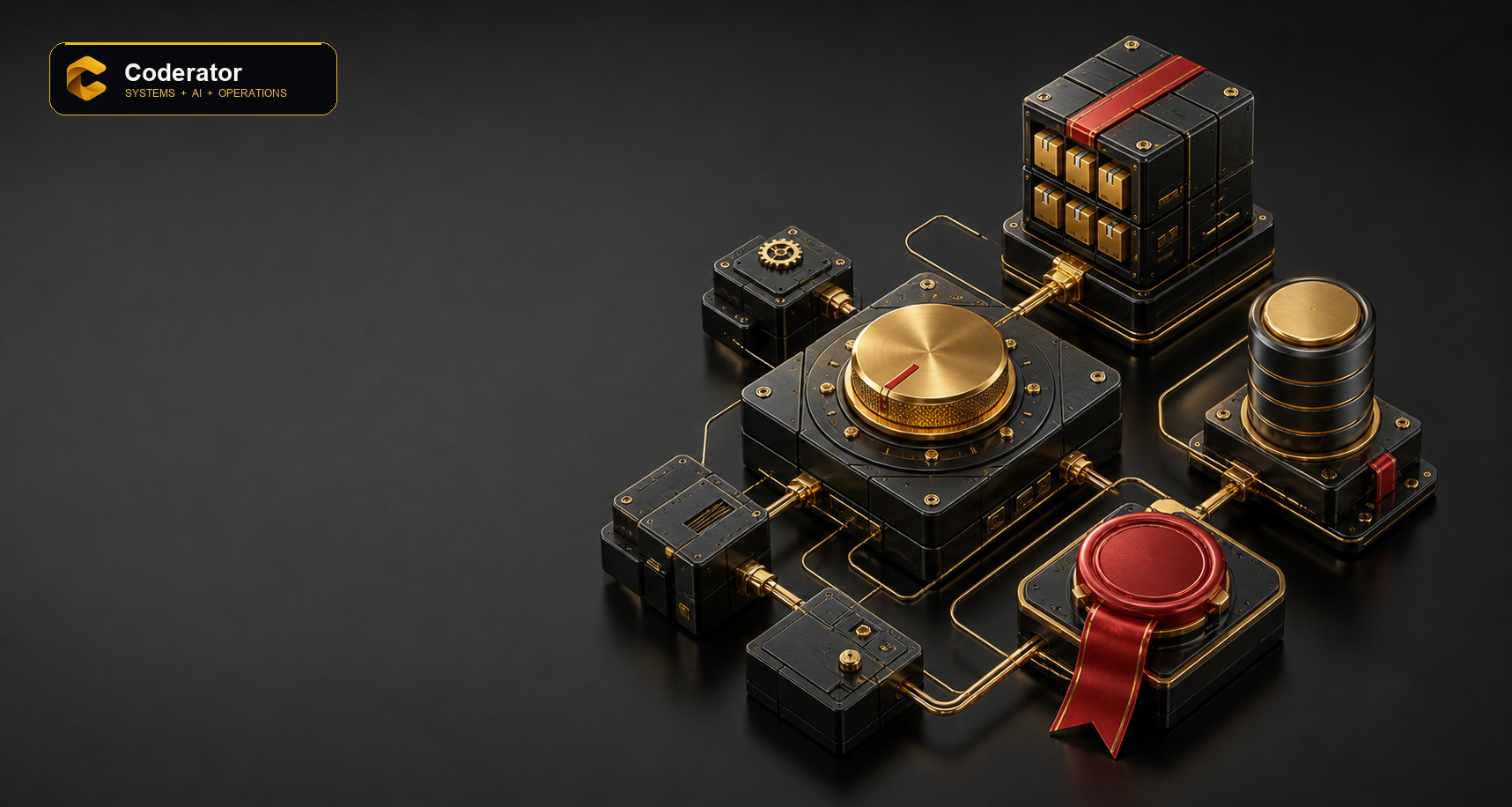
As any company grows, a quiet chaos sets in: the sales department uses one system, the warehouses rely on Excel spreadsheets, accounting runs on a separate program, and each department has its own “version” of the numbers. Your team wastes time compiling and reconciling data instead of using it, reports are delayed until they lose their value, and decisions are made based on outdated or conflicting information. This chaos doesn’t show up as an explicit line item on your budget, but it costs you every day: errors, delays, and guesswork. This is exactly where you should start thinking about an Enterprise Resource Planning (ERP) system.
At its core, an ERP system is a simple concept: every department in your company works from a single database, giving you a single source of truth and real-time visibility into everything that’s happening. But ERP projects are also among the software projects most likely to fail—for reasons that can be avoided. In this guide, we’ll provide you with the information you need before you begin: When you need a custom system instead of an off-the-shelf one, why ERP projects fail and how to avoid those pitfalls, system modules, cost and timeline factors, and how we build it at Coderator to manage your company—not hinder it.
1. Who is Coderator? And why do we build ERP systems differently?
Coderator is a software company specializing in building advanced business systems and integrating artificial intelligence into real-world operating environments. We operate from our offices in Giza and Riyadh to serve companies in the Middle East and North Africa. We don’t treat ERP as software that we sell and then force you to adapt your business to fit it; instead, we start with how you actually work and build the system around that. Our goal is a system that reflects your actual operations and streamlines them—not one that adds a new layer of complexity your team will complain about.
The first question we ask isn’t “How many modules do you want?” but “Where are the bottlenecks in your current operations?” — and based on the answer, we determine what’s worth building first, so we start with the highest value rather than building a massive system all at once.
2. What Is an ERP System, and When Do You Actually Need It?
An Enterprise Resource Planning (ERP) system is a single system that connects all of your company’s operations — sales, procurement, inventory, accounting, and human resources — into a unified database, so data flows automatically between them instead of having to be entered manually into each system. But not every company needs one right now. These signs indicate that the time has come:
- You’re entering the same data into multiple systems: an order is recorded in sales, then re-entered in inventory, then in accounting. This repetition is tedious and a source of errors.
- Your reports are delayed and inconsistent: It takes days to compile a unified picture of the company’s performance, and each department gives you a different number.
- You don’t have real-time visibility into your inventory or cash: You only find out your true status after it’s too late to act—not when you need to know.
- Your growth is suffocating you instead of delighting you: Every new customer or branch doubles the manual chaos instead of being seamlessly absorbed by your systems.
If you see most of these signs, you’re paying the “chaos tax” every day, and a properly built ERP system will stop this bleeding. But if your operations are simple and your few systems are enough for you, now might not be the right time—and we’ll tell you that straight up.
3. Off-the-shelf or Custom? The Decision That Determines Everything
This is the most important decision you’ll make, and it has implications in every direction. There’s no absolute “best” option, only the one that’s best suited to your situation:
Our rule: We won’t sell you customization you don’t need, nor will we push you toward an off-the-shelf system that stifles what makes you unique. The decision is based on the nature and scale of your operations and your growth plan—not on what suits us.
4. ERP System Modules: What Can They Include?
The strength of ERP lies in the integration of its modules on a single platform. We build what you actually need, in phases:
We don’t build all modules at once. We start with the modules that add the most value to your operations and add the rest gradually—so you see early returns instead of waiting months for a massive project to deliver any results.
5. Why Do ERP Projects Fail? (And Here’s What the Vendor Won’t Tell You)
The truth most vendors avoid: A large percentage of ERP projects stall or fail, often not for technical reasons, but for avoidable managerial ones. Knowing this in advance is half the solution:
Note that most of these reasons are not technical. Therefore, the success of your project depends as much on the implementation methodology and management as it does on the quality of the code—and that’s what we focus on from day one.
6. How We Ensure the Success of Your ERP Project
For every reason a project might fail, we build into our methodology the steps to avoid it:
- We start small and scale up: We implement the highest-value modules first, so you see early results and reduce project risks.
- We understand your operations before we build: Through analysis sessions of your actual situation, the system reflects how you work rather than being imposed on you.
- We clean up the data before migration: We process your legacy data before transferring it, so you start with a clean system rather than inherited chaos.
- We train your team and transfer knowledge: We ensure employees adopt the system through training and guidance—not just by handing over the code.
- We stay on board after launch: Ongoing support and development ensure the system grows with your company rather than becoming obsolete.
In short, we treat your ERP project as an operational transformation that we manage together with you—not as a simple software handoff and then we’re done.
7. Integration and Data Migration: Two Often-Overlooked Points That Cost a Lot
These two items are often overlooked in initial proposals and consume real time and effort, so we address them clearly from the start. The first is integration: ERP systems rarely stand alone, so we connect them to your other systems—your e-commerce store, payment gateways, shipping carriers, or existing tools — via APIs, so data flows automatically between them. The second is data migration: transferring your customer, product, and inventory data from your legacy systems to the new one. This phase, in particular, must include data cleansing; otherwise, you’ll carry old chaos over into the new system. We explicitly include both items in the scope and budget from day one, so they don’t catch you off guard halfway through.
8. Artificial Intelligence in ERP Systems: From Recording to Anticipation
Traditional ERP records what has happened; integrating artificial intelligence shifts it toward anticipating what will happen. This is precisely where we come in. Practical examples we build into the system:
We add these capabilities only where they provide real value, while ensuring your data remains secure and isn’t leaked to public training models.
9. How to Choose an ERP Development Company in Egypt: Criteria and Questions
Choosing an ERP partner is more critical than choosing the system itself, because the project is long-term and affects your entire operation. These criteria distinguish a serious partner from the rest:
And the crucial question: Ask them to explain how they’ll handle a potential failure. A company that speaks openly about the risks of ERP projects and how to avoid them is far more mature than one that promises you everything will be perfect.
10. The Industries We Serve
We build ERP systems tailored to the nature of each sector’s operations:
- Trade and Retail: Integrating sales, inventory, procurement, and multi-location accounting with a unified, real-time view.
- Manufacturing and Production: Manage materials, production, inventory, and costs within a single, integrated system.
- Logistics and Supply Chain: Manage warehouses, movements, suppliers, and data-driven planning.
- Healthcare and Pharmacy: Managing complex authorizations, branches, and pharmaceutical inventory under strict controls.
- Service Companies: Integrate projects, clients, billing, and resources into a single, integrated system.
11. What determines the cost of an ERP system and its return on investment (ROI)?
There is no fixed price for any ERP system, and any company that gives you a final figure before understanding your operations will either scale back the scope later or charge you additional fees along the way. Factors that drive cost and timeline:
- Number and complexity of modules: A system with two modules is radically different from one that covers all company departments.
- Off-the-shelf or custom: Full customization is initially more expensive than an off-the-shelf or semi-custom solution.
- Number of integrations: Each connection to a store, payment gateway, or third-party system is additional work that requires its own testing.
- The volume and condition of your data: Migrating large or disorganized data from a legacy system is a real consideration that’s often overlooked.
- Number of Users and Branches: Permissions and multi-branch operations add complexity and cost.
- Support and development: A post-launch plan is an essential requirement, not a luxury.
The returns, however, are clear in the medium term: saved work hours, fewer errors, accurate inventory that doesn’t tie up the owner’s capital, and faster decisions based on real-time data. Our approach is to start with the highest-value units to generate an early return that funds expansion, rather than tying up a massive budget in a long-term project before seeing any results.
12. Our Work Methodology and the Technologies We Use
We follow a phased methodology that delivers early value: a discovery session where we analyze your operations and pain points; defining an initial scope focused on the highest-value units; designing a solution that reflects your workflow; developing in reviewable increments; followed by clean data migration and integration with your systems, security testing and review, launch and training for your team, and then ongoing support and development. As for technologies, we choose what best suits your size and needs:
- Secure and scalable backend systems: Built to OWASP standards to support the growth of your company and its data.
- Reliable databases: A structured data architecture that ensures data accuracy and fast reporting.
- Application Programming Interfaces (APIs): To seamlessly integrate the system with your store, tools, and existing systems.
- Dashboards and business intelligence: A unified, real-time view through modern reporting and analytics tools.
- AI when needed: Add predictive analytics, document processing, and intelligent assistants where they add real value.