
Clothing Store App Design
Fashion is mostly bought on a whim, and the phone is where that happens: You’re scrolling through your feed in bed, you get a notification about a sale, and you buy something in se...
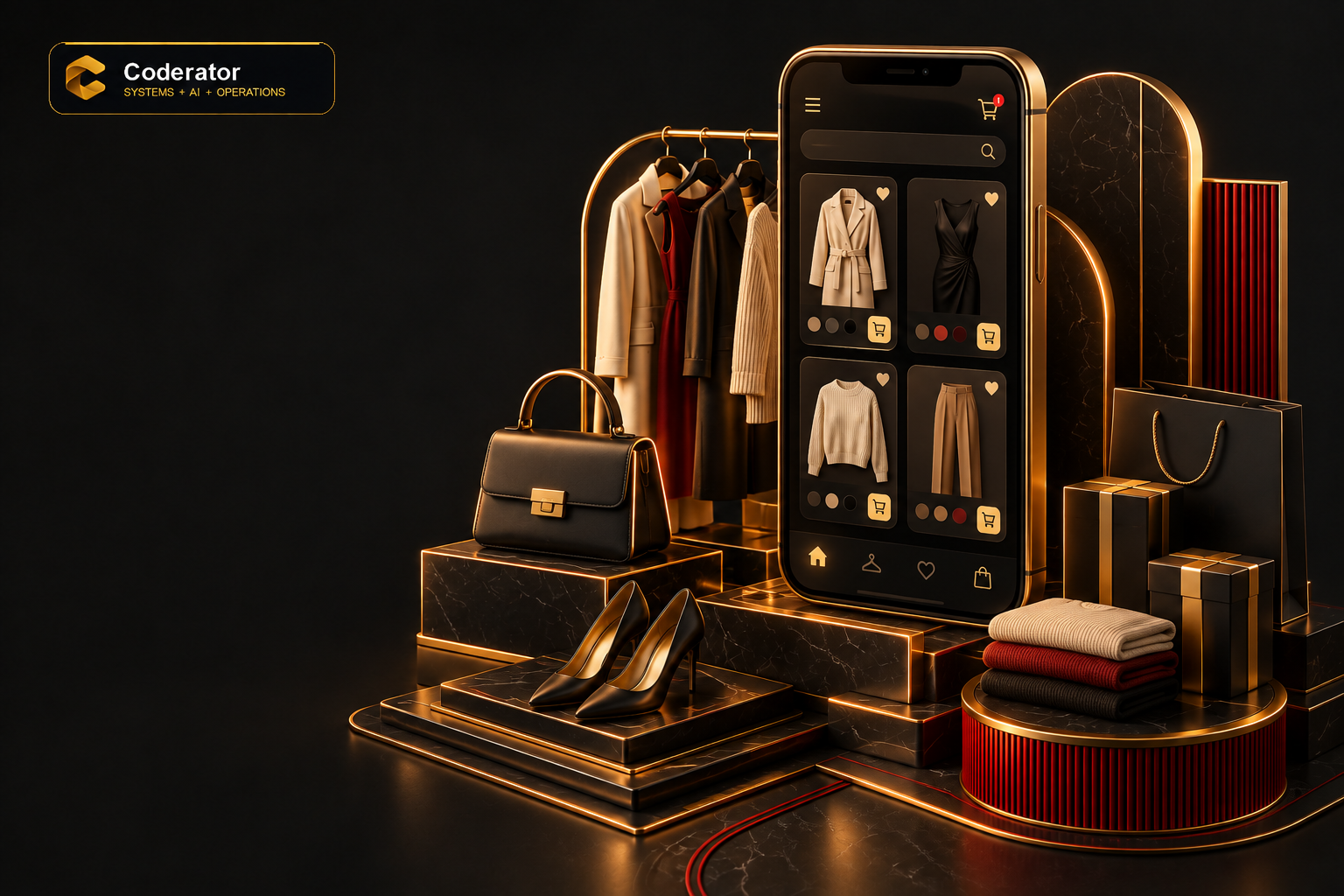
Clothing is most often bought on a whim, based on what catches the eye, rather than out of urgent need, and the smartphone is where these purchases take place today: Shoppers browse fashion while in bed, on public transportation, or during a work break; they see an item they like and buy it in seconds, or they receive a notification about a sale or a new collection and return to make a purchase without prior planning. This impulsive, visual behavior is at the heart of the fashion business, which is why the app—not the website—is its natural environment. But most of those selling you a “clothing store app” build a scaled-down version of a generic web store, ignoring two things: that fashion is a uniquely impulsive, visual sector, and that the app harnesses the power of the phone (notifications, daily browsing habits, and constant presence in the pocket) that transform a casual browser into a repeat buyer. A successful fashion app isn’t just a sales interface—it’s an impulse-buying engine that builds a daily shopping habit right in your customer’s pocket.
In this guide, we provide you with what your project truly needs: why an app is more powerful than a website in the fashion industry, how to leverage the phone’s capabilities for impulse buying, how to foster daily discovery, how to recover abandoned carts, how to reduce returns, how to build loyalty, how artificial intelligence can help you—and how we build all of that in Coderator.
1. Who is Coderator? And why do we build fashion apps differently?
Coderator is a software company specializing in building advanced business systems and integrating artificial intelligence into real-world operating environments. We operate from our offices in Giza and Riyadh to serve companies in the Middle East and North Africa. We treat fashion apps as impulse-buy drivers that leverage the power of mobile devices to sell fashion—not as a scaled-down version of a web store. That’s why we don’t start with the product screen; we start with the fashion shopper’s behavior: How do they browse for fun? What brings them back every day? And what turns their momentary interest into a purchase? Then we build an app that leverages notifications, browsing habits, and visuals to cultivate a daily shopping routine. Most importantly: the code and your customer data are entirely yours—so you’re not held hostage by a platform that takes a cut of your sales and locks you into a platform that restricts your brand and the customer base you’ve built.
2. Why is the app more powerful than the website in the fashion industry?
A website is excellent for visibility and search traffic, but in the fashion industry specifically, the app is its natural habitat due to the nature of fashion itself. Buying clothes isn’t an urgent, planned need (like buying medicine or booking a flight); rather, it’s a recurring, visually driven impulse: Shoppers love browsing fashion for fun; they’ll fall in love with an item and buy it on a whim, and they’ll return often to discover something new. This behavior suits the app perfectly because it’s always present in the customer’s pocket as an icon they open in their spare time; it sends notifications that bring them back, and it builds a daily browsing habit just like social media apps do.
Major fashion platforms (such as Shein, Namshi, and others) rely on the app as their primary interface because they recognize that fashion shoppers buy significantly more through the app than through the website — the app captures those moments of downtime and impulse that drive most clothing purchases. Anyone who builds an app as a scaled-down version of a website squanders this power, resulting in an app that’s opened only when needed (which is rare for clothing) and then forgotten. We build the app by leveraging its strengths to foster a habit of frequent browsing and purchasing, because the difference between a successful fashion app and an abandoned one lies in transforming it from a tool for occasional purchases into an enjoyable daily browsing destination that customers return to consistently.
3. The Phone’s Capabilities for Impulse Purchases
This is the essence of what sets a fashion app apart—and what those who build a website clone overlook. The power of the smartphone specifically serves visual impulse buying:
- Push Notifications: The most powerful sales driver in fashion—alerts about a new collection, the start of a sale, the return of a sold-out size, or a limited-time offer that creates a sense of urgency. They bring the customer back to the moment of opportunity, prompting a purchase.
- Daily browsing habit: An icon in the customer’s pocket that they open in their spare time, just as they check their messages, allowing them to discover new items and make impulse purchases repeatedly.
- An enhanced mobile visual experience: seamless browsing with large images and videos, and one-tap purchasing with saved information and payment details—so that the impulse moment isn’t lost in complicated steps.
Note that notifications, especially those related to trends, have a multiplier effect: since purchases are impulsive, a notification at the right moment (a sale, a new collection, a restocked size) can generate a sale that wasn’t originally planned. Minimizing the number of steps required to make a purchase is crucial because any complexity will cause you to lose the impulsive buyer before their enthusiasm wanes. These factors transform the app from a sales interface into an engine that captures moments of visual impulse and converts them into sales. We build this into the very core of the app because it’s what sets it apart from a website, and what makes fashion shoppers buy more from it and keep coming back.
4. Daily Discovery and Browsing Experience
A successful fashion app is designed for enjoyable browsing, not for searching for a specific product—and this requires a discovery experience crafted to retain and inspire the customer. We build an experience that makes browsing as enjoyable as scrolling through social media: A home feed that visually showcases new, recommended, and trending items in an appealing way that’s constantly refreshed, so customers find something inspiring every time; organizing products into inspiring collections (occasions, styles, “Complete the Look”), “Just Arrived,” “Best Sellers,” and “Selling Out Fast” sections, and easy filtering when searching for something specific (type, size, color, price).
We also include features that deepen engagement and discovery: favorites lists where customers can save items they like to come back to, the ability to follow categories or styles that interest them, and inspirational content (outfit ideas, looks). The more enjoyable and fresh the discovery experience is, the more time customers spend in the app and the more often they return—and every visit is an opportunity for an impulse purchase. An inspiring daily discovery experience is what transforms your app from a store opened only when needed into a daily browsing destination—and that’s the difference between a fashion app that builds a loyal user base and one that’s forgotten after the first purchase. We build it because it’s the heart of what keeps fashion shoppers coming back.
5. Sizes, Colors, and the Product Page
Although the app focuses on impulse and discovery, the fundamentals of the apparel business remain: managing sizes and colors (variants), and a product page that sells. We’re building a robust variant system: each item with its own sizes and colors, separate inventory for each combination, different images for each color, and the ability to automatically hide out-of-stock sizes or offer a “Notify Me When Available” option (which serves as a powerful notification that brings customers back). A rich, mobile-optimized product page: large, multi-angle images and a video of the item in motion; a description of the materials and cut; a clear size guide; reviews that highlight sizing accuracy; and a “Complete the Look” feature that suggests complementary items to increase order value.
The product page in a fashion app, in particular, must strike a balance between visual appeal (pictures sell) and providing information that reduces hesitation and returns (size, material, how it looks on the model). We design them to entice customers to buy while also answering sizing questions, because a beautiful but information-poor product page may sell the item only to have it returned later. The balance between aesthetics and information is what turns interest into a purchase that isn’t returned.
6. Abandoned Carts and Sales Recovery
Abandoned carts are a huge problem in fashion specifically, and this is where the app’s strength shines in solving it. In fashion, many shoppers add items to their cart but then hesitate and leave without buying (they’re thinking it over, waiting for their paycheck, or comparing prices). On a website, these shoppers are often lost. On the app, a notification brings them back: a gentle reminder of the items they left behind, an alert if their size is running low (creating a sense of urgency), or a small discount offer to overcome their hesitation. We’re building a smart recovery system: timely abandoned cart notifications, cross-device cart saving, and reminders about favorites that haven’t been purchased.
The impact on your sales is immediate: a large percentage of abandoned shopping carts in the fashion industry can be recovered with a smart, timely notification, and every recovered cart represents a sale that would otherwise have been lost. This is a feature the app has that the website doesn’t have to the same extent (the website relies on emails that may not be opened, while the app delivers notifications directly). We carefully build sales recovery tools because they’re among the most effective ways to boost fashion app sales with minimal effort—you’re winning back customers who showed genuine interest and were just one step away from making a purchase.
7. Reducing Returns
Returns remain the number one killer of fashion store profits (fashion items have the highest return rate due to sizing), and the app provides more powerful tools to address this. We build tools that tackle the root cause: An accurate size guide with actual measurements for each item, honest photos and details from every angle, the model’s size and height, and reviews noting size accuracy (fits perfectly/smaller/larger). The app also offers advanced tools that are difficult to provide on a website: a smart sizing assistant that suggests the right size based on the customer’s data and past purchases, and an augmented reality (AR) experience that lets customers visualize the item on themselves using their phone’s camera — an emerging technology that reduces hesitation and returns and sets your app apart.
Why is this doubly important in the app? Because impulse buying (the app’s strength) can increase returns if not balanced with good sizing tools—the customer buys quickly and then discovers the size is wrong. So we strike a balance: we encourage quick purchases while reducing returns with sizing tools. Reducing returns equals increased sales because they silently erode fashion margins, and we build these tools (especially the sizing assistant and the virtual try-on feature available on mobile) because they protect your profits, which could otherwise be squandered by impulsive purchases without proper sizing.
8. App Loyalty and Exclusivity
The app is a powerful tool for building loyalty and repeat purchases in fashion, and in this regard, it outperforms the website. We build tools that keep customers coming back: a loyalty program with points that reward them for every purchase and encourage repeat business, as well as app-exclusive benefits — such as discounts, collections, or early access available only to app users, which encourages customers to install it and shop through it instead of the website or other platforms. And we add features that deepen the relationship: an account that saves the customer’s sizes, preferences, and style to make their next purchase easier; targeted offers based on what they’ve liked and their purchase history; and personalized notifications tailored to their taste.
Loyalty in fashion is a thing of the past, because fashion shoppers buy frequently (for every season, for every occasion), and a loyal customer who opens your app first whenever they need something is far more valuable than a one-time buyer. Exclusive app benefits, in particular, are a smart tool for building a user base and converting website and platform shoppers to your own proprietary app. We build loyalty and exclusivity tools because they transform your app from a place where customers shop occasionally into their first and permanent destination for fashion—and that’s what builds a sustainable fashion business that doesn’t have to scramble for new customers every season.
9. Dashboard, Payment, and Shipping
Behind the app is a dashboard that manages your store, along with a payment and shipping system that completes the sale. We build an easy-to-use Arabic-language dashboard: manage products with their variants and inventory, organize collections, seasons, and sales, manage orders and returns, a customer database with measurements and preferences for targeted marketing, notification management (campaigns, abandoned carts, offers), and reports (best sellers, collection performance, return rates, notification effectiveness). We integrate the app with payment methods suitable for your market: online payment, cash on delivery (preferred in our market for those who are hesitant to buy without trying on items first), and installment/deferred payment (which increases the average order value in the fashion industry). We also integrate with shipping carriers for cost calculation and tracking, and a seamless returns and exchanges system (essential for clothing).
We design the dashboard specifically for running a fashion store, so you can efficiently manage your complex inventory, collections, notifications, and returns, and analyze your data (which items are being returned? Which notifications drive sales?) to make smart decisions. Seamless payment and shipping complete the impulse-buying experience, so you don’t miss the moment due to complicated payment processes or shipping uncertainties.
10. Artificial Intelligence in Fashion Applications
This is where we truly shine—AI in fashion directly drives sales and reduces returns:
We integrate it to actually boost your sales and reduce your returns—not just as a gimmick—while ensuring your customer data isn’t leaked to public training models. Note that the most powerful AI applications in fashion—recommendations that fuel discovery, size assistance, and virtual try-ons that utilize the phone’s camera—specifically serve what sets the app apart: impulse discovery and reducing returns.
11. Off-the-shelf solution or custom development? (When you don’t need a custom app)
Here, we’ll take your word for it—don’t always listen to those who try to sell you the most expensive solution. The decision depends on your stage and your ambitions:
- An off-the-shelf solution (a platform or ready-made app) may be enough if you’re a startup with a limited number of products testing the market and want a quick, low-cost presence, and are okay with a subscription model, limited customization, and a shared brand identity with other stores.
- Custom development becomes more cost-effective and powerful as your brand grows, or if you want a unique identity and experience that reflects your brand rather than a template, or advanced mobile capabilities (smart notifications, discovery, and exclusive loyalty features) that set your app apart, tools to reduce returns and AI capabilities, or full ownership of your customer base without a commission that increases as you grow.
We wouldn’t recommend a custom app if you’re starting with just a few items to test the market—a simpler solution might be enough for now. But when you become a serious fashion brand and your distinctive identity, mobile capabilities, and customer base become the core of your success, a custom app is an investment you own—one that grows with you without a subscription fee that eats into your margins. We’ll help you make the right decision for your stage of growth, with complete transparency.
12. Cost and Methodology
The cost of a fashion app varies depending on the number of products and the complexity of their variations, the operating systems (Android, iOS), the level of design and branding, phone features (notifications, discovery, loyalty), tools to reduce returns and artificial intelligence, and integrations (payment, shipping, installment plans). Therefore, it’s not accurate to give a definitive figure before understanding your brand, and anyone who gives you an immediate price without asking questions is selling you a template, not a solution. We start by understanding your brand, your audience, and your scope, then we outline the estimated cost and phases—and we often recommend starting with a solution that showcases your collection and drives sales first, before expanding into advanced features.
Our methodology results in an app that sells fashion intelligently: a discovery session where we define your brand, audience, and product nature, followed by designing a discovery and conversion experience that reflects your brand’s aesthetic, followed by the implementation of mobile features (notifications, discovery, cart recovery, and loyalty) and measurement tools and variables, thorough testing (especially under the pressure of sales events) before launch, and then data-driven support and development. We build an impulse-buy engine that fosters daily shopping habits and reduces your returns, then scale it as your brand grows.