
Designing an Online Clothing Store
Selling clothes online seems easy until you’re hit with the reality: endless sizes and colors, and returns that eat into your profits because the item “didn’t fit right.” A success...
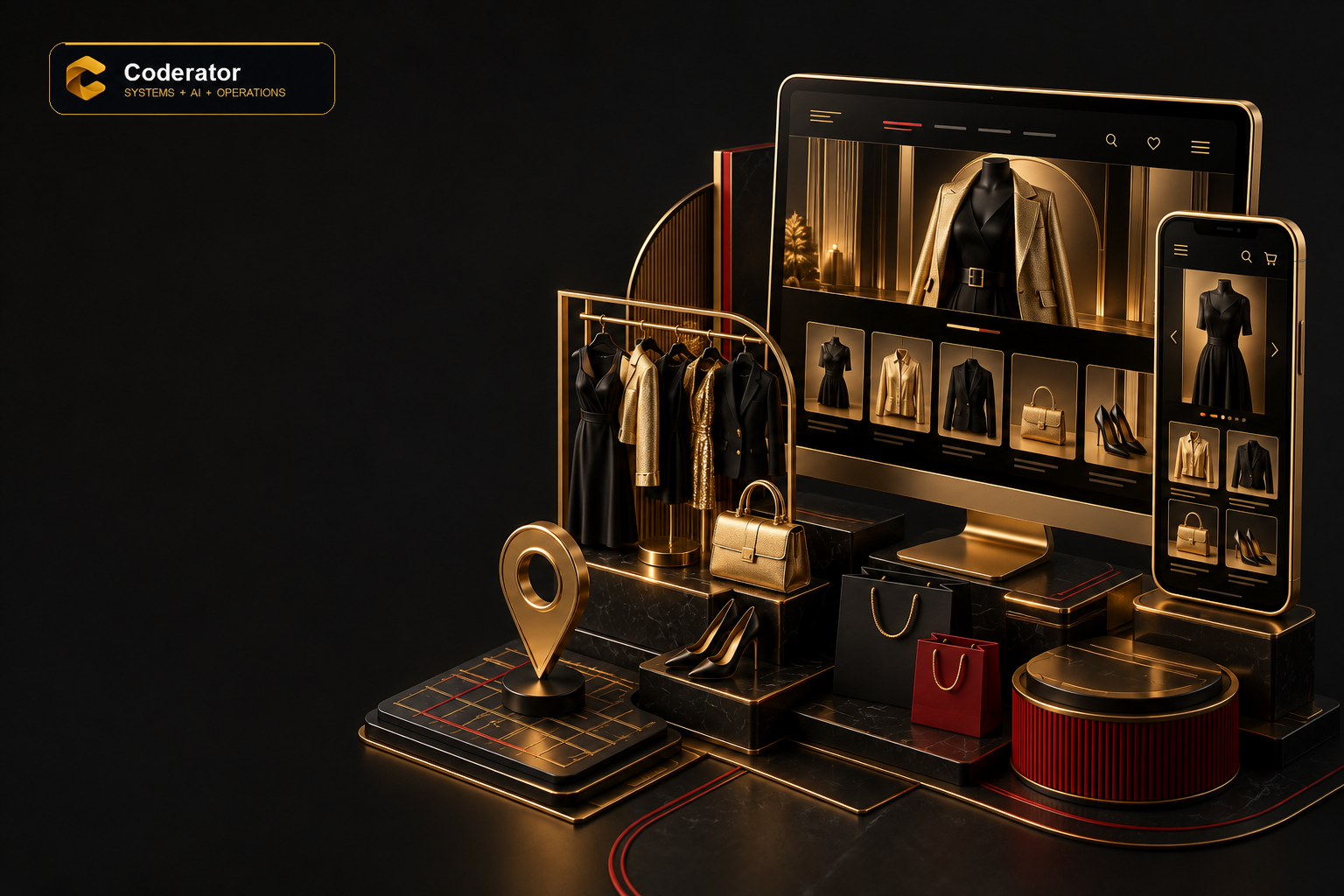
Selling clothes online seems like one of the easiest businesses: take photos of the items, list them, and wait for orders. But anyone who’s entered this field knows the reality is completely different: A customer orders three sizes to choose one and returns two; an item that looks great in the photo arrives looking different and gets returned; and inventory management is complicated because a single shirt in five sizes and four colors means twenty separate items that must be tracked. A clothing store isn’t just an ordinary store with pictures of clothes—it’s a business category with its own unique nature: highly visual, subject to seasonal fluctuations, and the category with the highest return rate of all due to sizing issues. Anyone who builds a clothing store—or any store, for that matter—without taking this nature into account will pay the price in returns that eat into your profits and a customer experience that frustrates your customers.
In this guide, we’ll provide you with what a fashion store truly needs: how to manage sizes and colors, how to reduce devastating returns, how to sell based on visual appeal, how to manage seasonal collections, what features the dashboard and shopping experience should have, and how artificial intelligence can help you in the fashion industry — and how we build all of that in Coderator.
1. Who is Coderator? And why do we build clothing stores differently?
Coderator is a software company specializing in building advanced business systems and integrating artificial intelligence into real-world operating environments. We operate from our offices in Giza and Riyadh to serve companies in the Middle East and North Africa. We treat a clothing store as a system designed specifically for the nature of fashion—not a generic template filled with images. That’s why we start with the reality of your business: How are your sizes and colors managed? How can we reduce your returns? And how do we showcase your items in the most compelling way to drive sales? We then build a store tailored specifically to these needs, managing precise variables, utilizing tools that reduce returns, and creating a visual experience that drives sales. Most importantly: the code and your customer data are entirely yours—so you’re not held hostage by a platform that takes a cut of your sales and locks in your brand and customer base.
2. Clothing is a unique product category—unlike any other store
The first mistake is to build a clothing store like any other online store. Clothing is a unique product category with characteristics found nowhere else, and each of these characteristics imposes specific requirements on the store. It is visual par excellence: customers buy with their eyes, and a poor-quality image kills the sale no matter how beautiful the item is. They are multi-variable: each item comes in sizes and colors that must be managed with precision. They are seasonal: collections change with the seasons and fashion trends and require constant updating. Most critically, they have the highest return rates because customers cannot try items on before purchasing; they order to try them on and return what doesn’t fit.
This nature means that a clothing store’s success isn’t measured solely by the beauty of its design, but by its ability to handle the characteristics of fashion: managing variables meticulously, minimizing returns, creating a visually appealing display that sells, and maintaining flexible seasonal management. A store that ignores this reality faces inventory chaos, returns that eat into its profits, and frustrated customers. We build our platform based on an understanding of these characteristics, because a successful fashion store is designed specifically for fashion—not just a general store decorated with pictures of clothes.
3. Sizes and Colors (Variant Management)
This is the heart of a tech-driven clothing store, and what most distinguishes it from other stores. A single item isn’t just one product but a set of combinations: a shirt in five sizes and four colors = twenty combinations, each with its own inventory, price, and images. Accurately managing this complexity is essential; any error means selling out of a size or creating inventory chaos. We build a robust variants system:
- Multiple variables for each product (size, color, material) with separate inventory for each combination.
- Different images for each color, so the customer sees the color they actually selected—not a single color for everyone.
- Automatically hide out-of-stock sizes or colors, or display them as “Unavailable” to prevent orders for items that are out of stock.
- Out-of-stock alerts for each combination, and different prices when needed (e.g., for plus sizes).
And we add features that benefit the customer: clear size and color selection on the product page, and a “Notify Me When Available” alert for out-of-stock sizes so you don’t lose an interested customer. Variable management isn’t just a technical detail—it’s the core of running a clothing store. We’ve built it to give you complete control over your complex inventory without chaos or selling out-of-stock items.
4. Reducing Returns (The Number One Profit Killer for Clothing Stores)
This is the most serious challenge facing a fashion store—and it’s overlooked by everyone who sells you a “store.” Clothing has the highest return rate of any product category, and the number one reason is always: the size didn’t fit. A return doesn’t just mean losing a sale—it also means double shipping costs, an item that may come back unsellable, and a frustrated customer. Returns silently eat away at clothing stores’ profit margins, and reducing them is equivalent to increasing sales. That’s why we build tools that address the root cause:
- Accurate sizing guide: A clear size chart for each item with actual measurements (not just S/M/L), so customers can confidently choose the right size.
- Authentic photos and details: High-quality photos from all angles, along with details on fabric, texture, and cut, so the item arrives exactly as the customer expected.
- Model’s measurements: The model’s measurements and height are listed in the photo, so customers can compare themselves to the model and estimate how the item will look on them.
- Customer size reviews: Reviews noting “fits true to size/runs small/runs large” help customers make more accurate choices.
Each of these tools reduces the likelihood of returns at the source: the right size and honest expectations mean a garment that fits and stays in the customer’s wardrobe. Reducing returns isn’t a luxury—it’s a direct way to protect your profits, which are eroded by returns. We build these tools into the very core of the store because they’re among the most important factors that distinguish a profitable fashion store from one that’s constantly struggling with returns.
5. Visuals and the Shopping Experience
Fashion is sold with the eyes first and foremost; the visual experience isn’t just window dressing—it is the sale itself. Customers browse clothes online just as they would stroll through a store, and a store that offers an attractive and seamless visual experience turns a browser into a buyer. We build your store to sell through visuals: a sleek design that reflects your brand’s identity and taste (after all, a fashion store sells taste, not just merchandise), large, high-quality images with zoom-in options for details, items displayed on models to show how they actually look, and perhaps a short video of the item in motion. And we make browsing enjoyable: smart filters (type, size, color, price, occasion), a “Complete the Look” feature that suggests pieces to complement what the customer is viewing—thereby increasing the order value—and curated collections that inspire the customer.
We’ll build a store that’s fully responsive and fast on mobile, since that’s where most fashion shoppers browse and make impulse purchases. The shopping experience must be seamless—from liking an item to completing the order with minimal friction—because every complicated step causes you to lose a buyer driven by impulse. A seamless and enjoyable visual experience is what transforms your store from a product showcase into a shopping destination that customers return to and recommend.
6. Seasonal Collections and Sales
Fashion is inherently seasonal: summer and winter collections, special occasions (Ramadan, holidays, back-to-school), and ever-changing trends. A successful clothing store keeps pace with this rhythm, and we build it with tools that allow for flexible management: Organizing products into seasonal, occasion-based, or style-based “Collections,” creating landing pages for new collections to highlight them, and easily managing sales and promotions (collection discounts, end-of-season clearance, buy two get a discount). We also build marketing tools that support the fashion cycle: “New Arrivals” and “Best Sellers” sections, coupons and discount codes, and waitlists for upcoming collections.
The ability to update collections and launch sales yourself quickly is a crucial advantage, because fashion doesn’t wait—and a store that lags behind the season ends up displaying outdated merchandise while customers move on to competitors. We’re building a dashboard that lets you manage your collections and seasonal promotions easily and without a developer, so you can keep up with the fast pace of fashion and take advantage of every occasion and season to boost your sales.
7. Dashboard and Inventory Management
Behind the store is a control panel that manages your business, and a clothing store needs a panel that understands the complexities of fashion. We’re building an easy-to-use Arabic interface that covers all your management needs:
- Manage products with their variants (size/color) and inventory for each combination separately.
- Organize collections, sections, and categories, and manage “New Arrivals” and “Best Sellers.”
- Real-time inventory tracking for each variant, low-stock alerts, and bulk product import.
- Manage prices, discounts, coupons, and seasonal promotions.
- Manage orders by status, and process returns and exchanges with a clear workflow.
- A customer database with purchase history and preferred sizes for remarketing.
- Sales reports: bestsellers, collection performance, and return rates per item.
- Team permissions, and management of content, banners, and the homepage.
We design the dashboard specifically for running a fashion store, so you can efficiently manage your complex inventory, collections, and returns, and analyze your data (which items are frequently returned? Which collections are successful?) to make smart decisions.
8. Payment, Shipping, and Returns
The clothing store experience is completed at checkout and shipping, which have specific considerations in the fashion industry. We connect your store to payment gateways suitable for your market (credit cards, digital wallets, and—most importantly in our market—cash on delivery, which reassures customers who are hesitant to buy without trying the item first), as well as installment options that increase the average order value in the fashion industry. We integrate with shipping carriers to calculate costs, create shipments, and track them, with the option of conditional free shipping (above a certain amount) that encourages more purchases.
And most importantly in the fashion industry: a seamless returns and exchange system. Returns are an inevitable part of the clothing business, and handling them professionally builds customer trust and encourages them to make purchases in the first place (customers shop with greater confidence when they know returns are easy). We establish a clear return/exchange process: requesting a return from the customer’s account, tracking its status, and easily exchanging for a different size. A clear and easy returns policy isn’t a cost—it’s a sales tool: it eliminates the customer’s fear of “What if it doesn’t fit?” so they’ll buy, and it turns the returns experience from frustration into loyalty. We build all of this to serve the nature of fashion, not as a generic add-on.
9. Artificial Intelligence in Fashion Retail
This is where we truly excel, and AI in fashion is a direct driver of sales and a reducer of returns:
We integrate these features to actually boost your sales and reduce returns—not just as a gimmick—while ensuring your customer data doesn’t leak into public training models. Note that the most powerful AI applications in fashion (size assistant, virtual try-on) directly tackle the number one killer—returns—thereby adding real business value, not just flash.
10. Security and Ownership of Your Data
Your store handles your customers’ payments, their data, and the customer base you’ve worked hard to build; protecting it safeguards your business and your reputation. We build the store on a foundation of strict security: full encryption of data and payments, protection of customer accounts, an infrastructure that withstands hacks and the pressure of sales seasons (when traffic spikes), and regular backups. Most importantly—your data and customer base belong solely to you, stored in a secure environment that is not shared with any third party and is not used to train general models. In the fashion industry, your customer base—including their sizes, preferences, and purchase history—is a goldmine for remarketing. We protect it as your most valuable asset and grant you full ownership of it, rather than having it held hostage by a platform that owns your customers and takes a cut of every sale.
11. Off-the-shelf platform or custom development? (When you don’t need a custom store)
Here, we’re telling you what those who always try to sell you the most expensive solution won’t: The decision depends on your stage and your ambitions:
- A ready-made platform (like Shopify or local platforms) may be enough if you’re just starting out with a limited number of products and want a quick launch at a low startup cost, don’t mind a monthly subscription and limited customization, and are selling using a simple, standard model.
- Custom development becomes more cost-effective and powerful as your brand grows and your product range expands, or if you want a unique experience and visual identity that reflects your brand—not a template that looks like thousands of other stores—or specialized tools to reduce returns and utilize artificial intelligence, or full ownership of your customer base without a subscription fee that increases as you grow.
We wouldn’t recommend a custom store if you’re starting with just a few items to test the market—a ready-made platform that saves you money right now might be enough. But when you become a serious fashion brand and a distinctive visual identity, minimizing returns, and owning your customer base become the core of your success and profits, custom development is an investment you own—one that grows with you without a subscription fee that eats into your margins. We’ll help you make the right decision for your current stage, in all honesty.
12. Cost and Methodology
The cost of a clothing store varies depending on the number of products and the complexity of their variations, the level of design and visual identity, tools to reduce returns, the scope of integrations (payment, shipping, inventory), and AI components. Therefore, it’s not accurate to give a definitive figure before understanding your brand and its scope; anyone who gives you an immediate price without asking questions is selling you a template, not a solution. We start by understanding your brand, your audience, and your scope, then we outline a clear breakdown of costs and phases—and we often recommend starting with a solution that showcases your collection and sells confidently first, then expanding from there.
Our methodology results in a store that sells fashion intelligently: a discovery session where we define your brand, audience, and product nature; then designing a visual experience that reflects your brand’s aesthetic and drives sales; followed by building a system of variables, tools to reduce returns, and integrations; thorough testing (especially under the pressure of sales) before launch; and then support and development based on your sales and returns data. We’ll build a fashion-focused store that drives sales and minimizes returns, then scale it as your brand grows.